 By Miah Ayaan
Singapore’s private housing market has reached an important evolutionary milestone. For decades, property decisions were framed around simple binary choices: central location versus suburban space, or immediate resale yield versus new launch capital gains. Today, modern homebuyers, foreign corporate executives, and private wealth managers evaluate property through a far more sophisticated lens—one defined by environmental sustainability, spatial efficiency, and seamless urban transit integration.
Driven by the national directives of Singapore’s Green Plan 2030 and extensive Mass Rapid Transit (MRT) network expansions, developers are re-engineering residential developments. The market now features two distinct growth engines: low-density, sustainable luxury enclaves in prime central districts, and highly connected, high-efficiency transit nodes in regional growth corridors.
Navigating these complementary property classes requires a clear understanding of how green building architecture, location fundamentals, and tenant demographics drive long-term real estate value.
The Green Benchmark: Low-Density Biophilic Living in Prime District 10
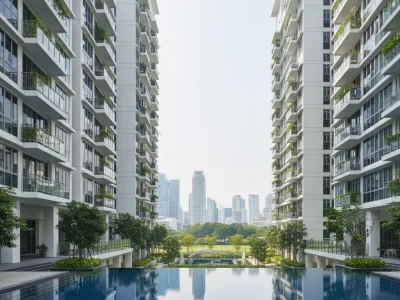
In Singapore’s Core Central Region (CCR), luxury real estate is undergoing a structural transformation. High-net-worth families and global buyers no longer define prestige solely by high floor heights or lavish interior finishes. Instead, biophilic architecture, reduced urban heat absorption, low unit density, and quiet natural surroundings have become the essential hallmarks of high-end residential living.
BIOPHILIC ARCHITECTURE VALUE DRIVERS
Core Feature Environmental Mechanism Lifestyle & Financial Impact
——————————————————————————————–
Low-E Double Glazing Blocks UV & solar heat gain Reduces home AC power usage & bills
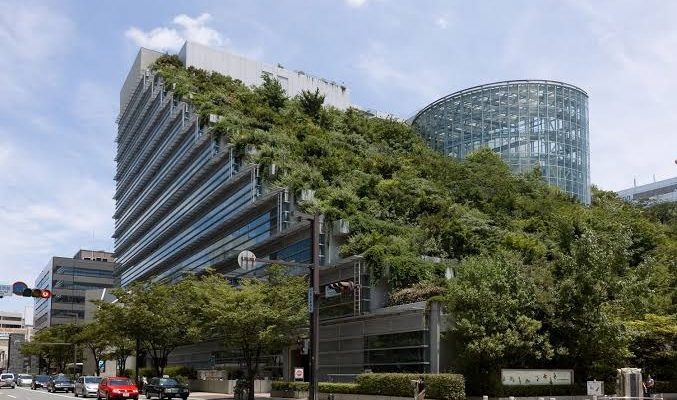
Vertical Landscaping Absorbs ambient noise & carbon Creates micro-climate cooling
Low Plot Ratio Site Planning Maximize unbuilt ground area Delivers acoustic privacy & space
1. Passive Thermal Design and Energy Efficiency
In tropical Singapore, residential cooling accounts for a significant portion of monthly utility expenditure. Modern luxury developments in prime enclaves employ passive thermal design principles to reduce reliance on continuous air conditioning.
By using Low-Emissivity (Low-E) double-glazed glass facades, deep window overhangs, and natural cross-ventilation building layouts, these residences keep indoor temperatures lower naturally. This structural approach delivers quiet indoor comfort while significantly lowering a home’s carbon footprint.
2. Micro-Market Scarcity in Exclusive Green Corridors
Low-density private residential sites surrounded by protected landed housing zones and natural greenery are exceptionally scarce in District 10. Because additional land supply in established prime enclaves cannot be easily expanded, low-density private developments in these locations exhibit strong capital preservation across changing economic cycles.
Homeowners and investors searching for low-density luxury in serene central enclaves often explore boutique developments like Amberwood at Holland, where low-rise architecture, biophilic green landscaping, and immediate proximity to Holland Village create a private residential retreat.
Transit-Oriented Development: Maximizing Cash Flow and Commuter Convenience
While low-density central residences anchor multi-generational family wealth, high-density Transit-Oriented Developments (TODs) along major regional transportation corridors serve as key engines for rental yield performance and daily commuting convenience.
1. The Financial Advantage of Doorstep MRT Infrastructure
For working professionals, tech sector specialists, and corporate tenants, daily commute time is a top priority when selecting rental housing. Residential developments situated within a short walk of major MRT lines and multi-line interchanges consistently achieve lower tenant vacancy rates and higher gross rental yields compared to properties requiring feeder transport connections.
Doorstep transit access insulates property performance against broader economic pullbacks, as location convenience remains a permanent requirement for mobile urban renters.
2. Regional Job Hub Integration
Singapore’s long-term urban strategy decentralizes commercial activity away from the traditional Central Business District (CBD) toward regional hubs like the Jurong Lake District (JLD) and One-North research belt. Properties positioned along strategic transport links connecting these commercial nodes benefit from continuous tenant demand driven by regional workforce expansion.
Investors and homebuyers seeking yield-generating assets with direct MRT access and seamless connections to major regional commercial nodes frequently analyze modern developments like Lucerne Grand, reviewing floor plan efficiency, site accessibility, and surrounding infrastructure developments.
Comparative Investment Framework: Matching Assets to Strategic Goals
To construct a balanced real estate portfolio, investors should align specific property acquisitions with their financial horizons and risk profiles.
PROPERTY PORTFOLIO ALLOCATION MATRIX
INVESTMENT CRITERIA PRIME LOW-DENSITY ENCLAVE TRANSIT-ORIENTED GROWTH HUB
——————————————————————————————–
Primary Objective Capital preservation & legacy High gross rental yield & cash flow
Geographical Classification Core Central Region (CCR) Rest / Outside Central Region (RCR/OCR)
Target Tenant Profile Corporate executives & expatriate Tech professionals, medical staff &
families regional business workforce
Supply Dynamics Extremely tight land scarcity Phased regional master plan releases
Holding Horizon Multi-generational / 10+ years Medium to long-term (5-10 years)
Key Questions to Ask Before Purchasing:
- What Is the Primary Portfolio Goal? If the priority is wealth transfer and low price volatility, focus on low-density central assets. If the goal is maximizing monthly net rental income, prioritize transit-linked growth nodes.
- How Does the Land Supply Pipeline Look? Areas with restricted government land sales offer high capital stability, whereas districts undergoing active master plan development offer catalytic infrastructure growth.
- What Is the Surrounding Tenant Profile? Align unit layout choices (e.g., 1-bedroom versus 4-bedroom) with the dominant employment sectors operating nearby.
Investor Insight: Combining a low-density prime central asset for long-term capital preservation with a transit-linked suburban unit for consistent monthly cash flow creates a resilient real estate portfolio capable of navigating shifting market cycles.
Practical Due Diligence Checklist for Buyers in 2026
Before committing capital to any private property purchase, complete a systematic audit across these critical dimensions:
- Evaluate True Usable Area: Prioritize floor plans that feature squarish living dimensions and minimal corridor waste to ensure maximum functional living space per square foot.
- Verify Green Building Ratings: Check if the development carries BCA Green Mark certifications (GoldPLUS or Platinum), which confirm low building operational costs and energy-efficient building systems.
- Stress-Test Financing Parameters: Calculate monthly mortgage repayments using conservative interest rate assumptions to ensure comfortable debt servicing under any macroeconomic condition.
- Review Developer Track Record: Research the developer’s CONQUAS scores and inspect their mature completed projects to confirm structural execution quality and material durability.
Strategic Summary for Real Estate Investors
Achieving long-term success in Singapore’s private property market requires selecting assets backed by clear structural fundamentals. By balancing the capital protection of low-density green enclaves in prime central districts with the cash-flow efficiency of transit-oriented growth hubs, buyers can build a versatile real estate portfolio structured for lasting value.